The Gut-Skin Axis: Why Your Breakouts Start in Your Stomach
The most expensive serum in your cabinet can't fix a gut that's inflamed. Here's the science of the gut-skin connection — and the simple daily habit that reliably moves skin in the right direction.
If you've ever tried six skincare routines in a row and watched your skin flare up anyway, there's a good chance the problem isn't on your face — it's in your intestines. Dermatologists have known for almost a century that the digestive system and the skin talk to each other constantly, but only in the last decade has the mechanism been mapped in detail. Researchers now have a name for it: the gut-skin axis.
The short version: your gut bacteria regulate inflammation, hormone clearance and nutrient absorption. When those bacteria are out of balance — a state called dysbiosis — the downstream effects show up on your skin before they show up anywhere else. Acne, eczema, rosacea, dullness, premature wrinkles: all of them have documented links to what's happening inside your intestines.
What the gut-skin axis actually is
Your gut is lined with a single-cell-thick barrier. On the gut side of that barrier live around 38 trillion microbes. On the body side run the blood vessels and nerves that feed every organ — including your skin. When the barrier is healthy and the microbes are balanced, your gut produces short-chain fatty acids (SCFAs) like butyrate that calm systemic inflammation.
When the barrier leaks or the microbes tilt toward harmful species, the opposite happens. Bacterial fragments called lipopolysaccharides (LPS) cross into the bloodstream. Your immune system reacts. Cytokines rise. And because skin is the largest organ you have, with its own dense immune network, it's usually the first place you see that inflammation show up — as redness, breakouts, or a dull, tired-looking complexion.
The three ways your gut sabotages your skin
1. Chronic low-grade inflammation
Dysbiosis keeps your immune system in a constantly raised state. That low-grade inflammation increases sebum production, disrupts cell turnover, and makes pores clog faster. It's also the mechanism behind that puffy, inflamed look many people notice after a few days of eating poorly.
2. Hormonal misfires
Your gut helps clear excess estrogen and androgens. When the microbiome is off, these hormones recirculate — which is why hormonal acne along the jaw and chin often tracks with digestive issues. Fixing the gut doesn't replace endocrine care, but it removes a major amplifier.
3. Nutrient blackouts
Even a great diet won't help if your gut can't absorb what's in it. Zinc, vitamin A, vitamin D, omega-3s and B-vitamins all need healthy intestinal tissue to cross into your bloodstream. Without them, collagen production slows, skin takes longer to heal, and fine lines set in earlier.
Patients who heal their gut often see a change in their skin before they see anything else. It's the most visible feedback loop in the body.
Why probiotics alone aren't enough
If you've tried a probiotic yogurt and seen no change, you're not alone. Most probiotic products deliver a single strain of bacteria in a quantity too small to survive stomach acid. And even if they did survive, they'd arrive in a gut that has nothing for them to eat.
That's the piece most people miss. Probiotics are the bacteria. Prebiotics are their fuel. Drop bacteria into a gut with no fuel and they die before they colonize. This is why serious gut protocols always combine the two — and why clinical research on skin improvements uses pre+probiotic combinations, not probiotics alone.
- Look for multi-strain formulas with at least 5–10 billion CFUs so enough survive transit.
- Prebiotic fiber (inulin, FOS, GOS) feeds the good bacteria once they arrive.
- Take consistently for at least 6–8 weeks — the microbiome doesn't shift overnight.
- Pair with the basics: hydration, sleep, and reducing alcohol and ultra-processed food.
What to expect on a realistic timeline
Weeks 1–2: digestion starts to feel steadier — less bloating, more regular bowel movements, more comfortable mornings. Weeks 3–4: inflammation markers drop. Some users notice brighter skin and a calmer tone. Weeks 6–8: clearer, smoother skin is usually visible if breakouts were the main complaint. This isn't a promise — it's the pattern that shows up in most honest reviews of pre+probiotic protocols.
The bottom line
Skincare works on the surface. The gut-skin axis works from the inside — and for most people dealing with chronic breakouts, dullness or hormonal acne, the inside is where the leverage is. A pre+probiotic daily habit is one of the cheapest, best-studied interventions in this category, and the downside is essentially zero.
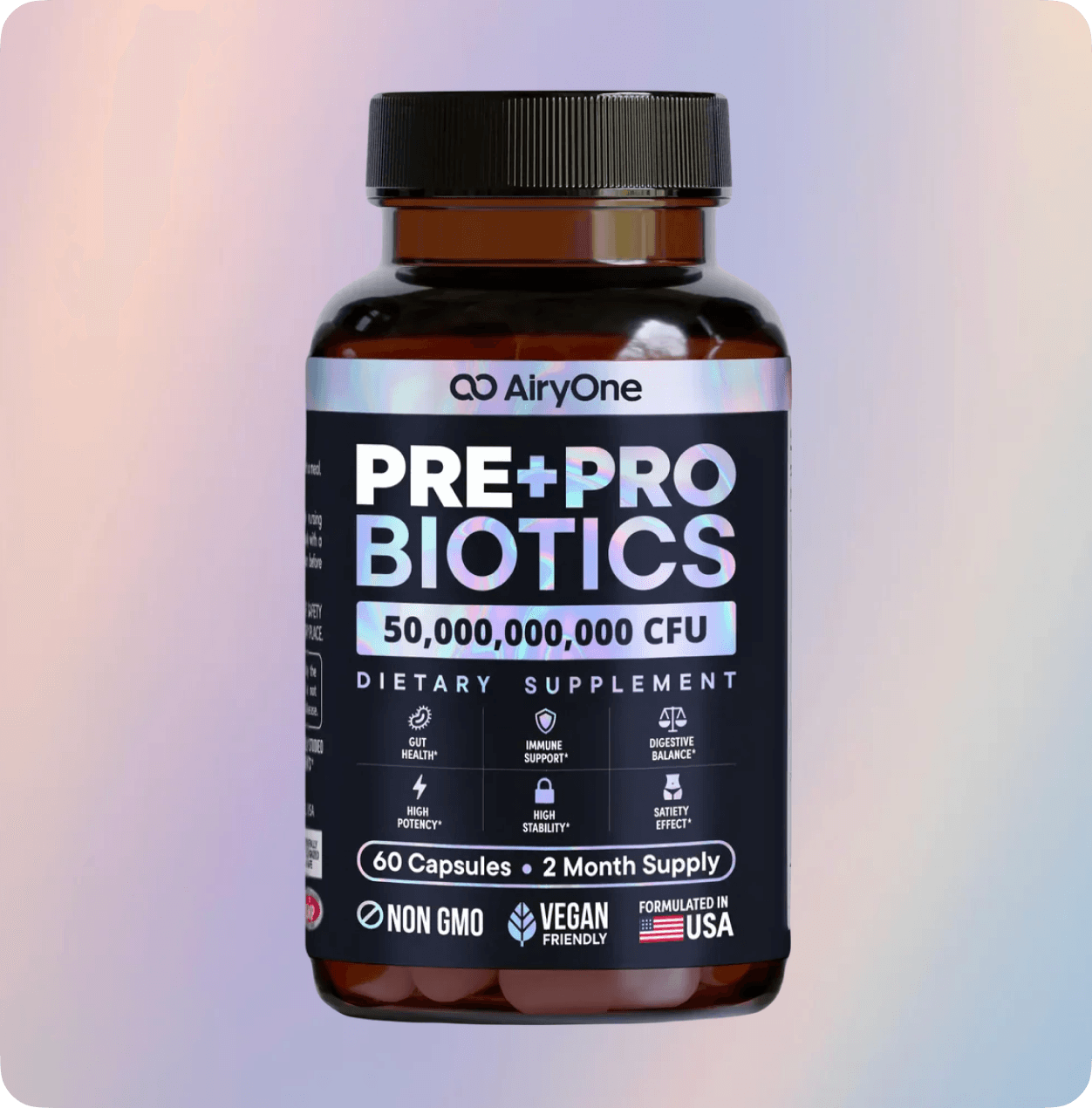
If you want a starting point that already has the multi-strain formula, the prebiotic fiber, and the dosing dialed in, we built AiryOne exactly for this.
AiryOne Pre+Probiotic: built for the gut-skin axis
A daily capsule with 10 probiotic strains plus the prebiotic fiber that keeps them alive. Designed to support the gut barrier, calm systemic inflammation, and let your skin do what it naturally wants to do.
- 10 clinically-studied probiotic strains + prebiotic inulin in one capsule
- Delayed-release so bacteria reach the intestines, not stomach acid
- Most customers report calmer skin and less bloating within 4–6 weeks
- 30-day guarantee — if it doesn't work for you, you don't pay
This article reflects research published in peer-reviewed literature and the real experience of AiryOne customers. It isn't medical advice — if you have a condition, talk to your doctor first.